
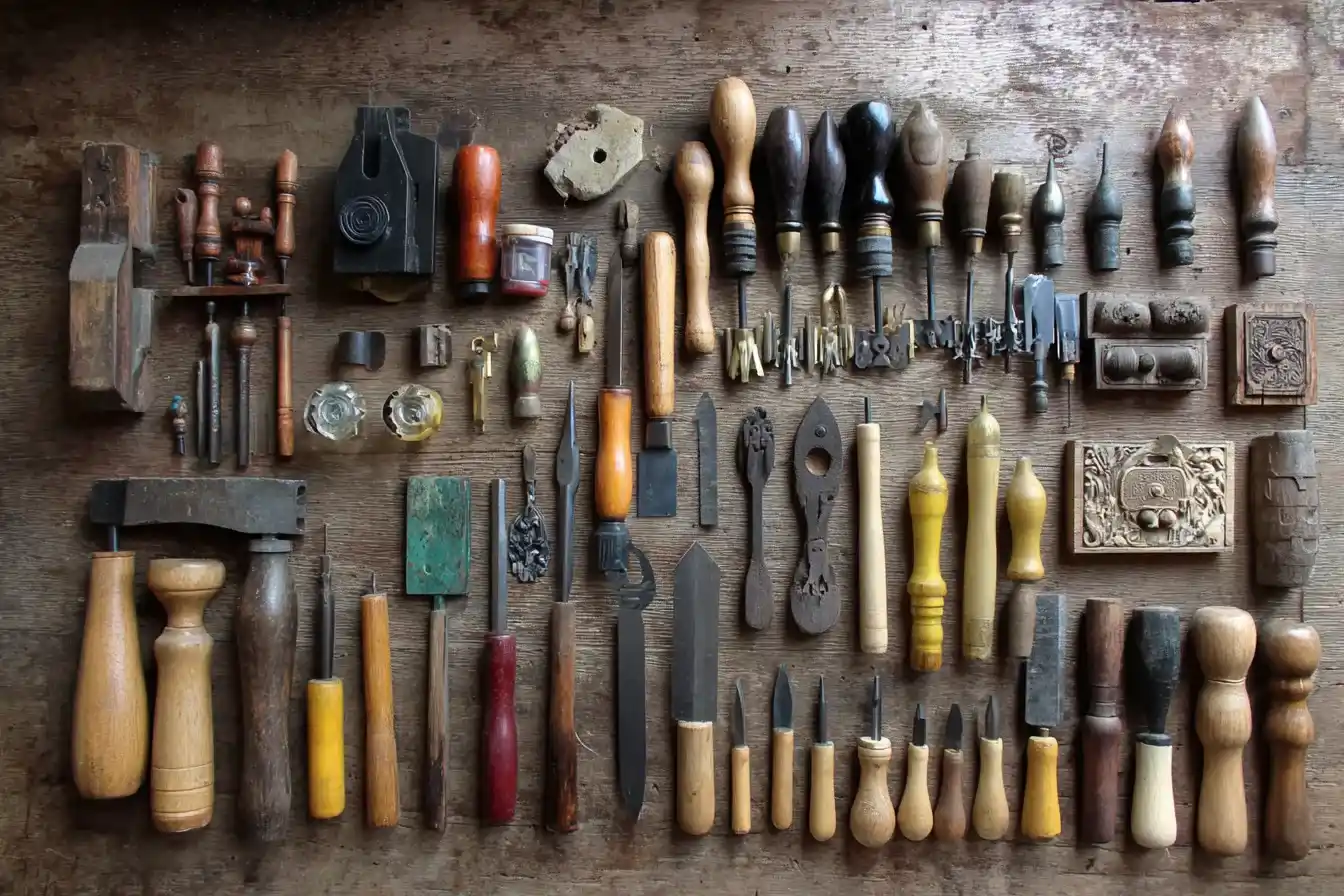
Woodworking has evolved rapidly, and essential woodworking tools in 2025 are more advanced, accessible, and beginner-friendly than ever. Whether you’re building your first cutting board or leveling up to intermediate furniture projects, understanding what belongs in a modern woodworking starter kit is crucial. This guide walks you through the must-have tools for woodworkers, explains how new technologies have transformed the craft, and helps you confidently build your workshop without wasting money on unnecessary gear.
The Evolution of Essential Woodworking Tools in 2025
Woodworking in 2025 blends tradition with innovation. While classic hand tools remain irreplaceable, modern woodworking gear has improved precision, efficiency, and safety. Many woodworking tools for beginners now feature digital measuring systems, ergonomic grips, and AI-assisted calibration that were once reserved for professional shops.
Today’s essential woodworking tools include a mix of hand tools, power tools, and smart devices that help beginners avoid early mistakes. Tools such as laser-guided circular saws, battery-efficient cordless drills, and digital calipers provide more control and reduce the frustration often experienced in the early stages of learning.
For helpful tips and community updates, many new woodworkers also follow dedicated groups like Woodwork Center on Facebook to stay current with tool trends, tutorials, and workshop setups.
The Must-Have Hand Tools for Every Woodworking Starter Kit
Even with advanced technology, the backbone of woodworking remains high-quality hand tools. A reliable woodworking starter kit in 2025 still includes:
1. A Precision Block Plane
The block plane continues to be a beginner’s best friend. It allows you to smooth edges, trim joinery, and fine-tune parts without complicated setups. New 2025 models feature micro-adjust knobs and anti-vibration bodies that make each pass smoother and safer.
2. Updated Chisel Sets
Modern chisels are sharper for longer and come with impact-resistant handles designed to reduce wrist fatigue. The must-have chisels for woodworkers typically include 6 mm, 12 mm, 20 mm, and 26 mm widths. They’re perfect for mortises, joints, and general shaping.
3. Digital Tape Measures and Marking Tools
In 2025, accuracy is easier than ever. Smart measuring tapes sync with your phone, log dimensions, and offer fraction-to-decimal conversions. This greatly reduces errors—a common hurdle for newcomers.
4. A Multi-Use Hand Saw
A universal pull saw is indispensable. Japanese pull saws, in particular, offer unmatched precision for beginners who want clean, controlled cuts.
These hand tools form the foundation of your kit, ensuring you build strong habits without rushing into complex machinery.
Power Tools That Beginners Should Master First
As you advance from beginner to intermediate woodworking, the right power tools will expand your possibilities dramatically. The essential woodworking tools in 2025 include smarter, safer power tools that help you achieve professional results faster.
1. Laser-Guided Circular Saw
Circular saws are now equipped with laser tracking and depth sensors that automatically adjust blade height for optimal cutting. Ideal for straight cuts in plywood, boards, and dimensional lumber, they reduce waste and improve accuracy.
2. Brushless Motor Cordless Drill
A brushless cordless drill remains one of the most essential woodworking tools. 2025 models include torque automation: the drill senses the resistance of the material and adjusts power accordingly, preventing over-drilling.
3. Compact Router with Digital Depth Control
Routers allow beginners to cut grooves, round edges, and create custom shapes. New digital routers display exact depth on a built-in LED screen and lock automatically to prevent sudden slips.
4. Smart Orbital Sander
Orbital sanders now include vibration-dampening grips and dust sensors that alert you when the bag is full. Smooth finishes are easier and more consistent than ever.
To see how real hobbyists use these tools—and to connect with fellow beginners—check out the social community at Woodwork Center on Facebook.
Intermediate Add-Ons: The Tools That Level Up Your Woodworking
Once you’ve mastered the fundamentals, intermediate woodworkers should consider upgrading to more advanced tools. These additions ensure you can tackle furniture-grade builds with precision and stability.
1. A Compact Table Saw with Safety Stop Technology
Compact table saws in 2025 are safer thanks to electronic flesh-detection systems and automatic blade brakes. They also include better dust collection, foldable stands, and quieter motors.
2. A High-Accuracy Miter Saw
Modern miter saws come with dual-rail sliding systems, LED shadow line indicators, and preset bevel angles. Perfect for picture frames, furniture legs, and trim work, they offer unmatched precision.
3. Benchtop Planer with Smart Thickness Sensing
Ideal for flattening rough lumber, 2025 planers include sensors that automatically measure board thickness and adjust the cutter head accordingly. This reduces tear-out and saves time when preparing stock for projects.
4. Joinery Systems and Pocket-Hole Jigs
Joinery remains the key differentiator between amateur and intermediate builders. Updated pocket-hole jigs include dust-free drilling, more accurate angle guides, and clamp-assist systems, making strong joints easier for all skill levels.
With these intermediate tools, your workshop becomes capable of producing professional-grade furniture and advanced DIY builds with confidence.
Building your workshop doesn’t have to be overwhelming. By starting with the essential woodworking tools in 2025—and gradually adding smart power tools and intermediate gear—you’ll develop the skills and confidence needed to take on any project. Whether you’re just beginning or leveling up, the modern woodworking world gives you everything needed to craft with precision and pride.
Ready to start building? Follow Woodwork Center on Facebook for expert tips, tool guides, and step-by-step inspiration to accelerate your woodworking journey.