

A Deep-Research, Report-Style Buying Guide for Serious DIY Woodworkers (2025)
If you’ve been around job sites or serious home shops long enough, you know “best circular saw” is not a single winner—it’s a set of tradeoffs that changes with material, cut type, dust/noise constraints, accuracy demands, and whether you’re tied to a battery platform. This report synthesizes safety standards, occupational research, and hands-on test data to help professional DIY woodworkers choose the Best Circular Saws with the same rigor you’d apply to selecting a jointer or table saw.
It’s also written to work as a cornerstone resource for the related searches you actually see in the real world: best skill saw, best power saw, and best cordless circular saw.
Executive decision summary
The “best” circular saw depends on your primary use-case
1) Sheet goods + finish-quality rips (cabinet-grade DIY):
Prioritize baseplate rigidity, bevel detents that don’t lie, splinter control, and a track/guide ecosystem (or track-saw adjacency). Dust extraction matters more than most people think for cut quality and line visibility. (Wood-dust exposure control is also a legit health topic in the research literature.) (OUP Academic)
2) Framing/decking/structural lumber:
Prioritize power under load, torque feel, robust guards, and ergonomics for long rip cuts. If you cut a lot of wet PT lumber, don’t underestimate the value of a saw that stays stable when the kerf pinches.
3) Mixed DIY (the “one saw” buyer):
A high-quality 7-1/4″ sidewinder (corded or strong cordless) remains the most versatile “best power saw” choice for general woodworking and renovation.
Source methodology (what “deep research” means here)
This guide deliberately combines:
- Safety and compliance standards for hand-held circular saws (IEC/UL), which shape guard behavior, braking, and baseline safety requirements. (webstore.iec.ch)
- Occupational safety guidance for dust/noise exposure (OSHA, CDC/NIOSH-adjacent documents, HSE research). (CDC Stacks)
- Peer-reviewed and academic manufacturing research on circular saw cutting conditions, energy/noise, and blade design effects. (BioResources)
- Hands-on comparative testing from reputable tool evaluators for real-world performance and category winners. (Popular Mechanics)
That mix matters because “best skill saw” decisions fail when they’re based only on spec sheets—or only on anecdotal reviews—without anchoring to how saws behave under load, how dust/noise impacts the operator, and how standards constrain design.
What defines the Best Circular Saws for serious DIY woodworkers
1) Real cutting performance: power under load beats no-load RPM marketing
Most circular saw spec sheets highlight no-load RPM, but what you feel in plywood stacks or wet framing lumber is speed retention, anti-stall behavior, and (for cordless) battery current delivery.
A practical rule:
- Higher RPM can cut faster in easy material if the saw doesn’t bog.
- Torque and stability win when you’re pushing feed rate, cutting thick stock, or dealing with pinching kerfs.
Tool testers consistently find that “winners” are the ones that maintain cut speed during demanding rips—not just those with impressive top RPM. (Pro Tool Reviews)
2) Worm drive / rear-handle vs sidewinder: don’t treat it like a style preference
The long-running distinction matters mechanically and ergonomically.
- Sidewinder (direct drive / spur gear): typically lighter, higher RPM, compact.
- Worm drive / rear-handle (or hypoid variants): typically lower RPM but higher torque feel, longer/narrower body, and often preferred for long rips in framing because the rear handle can support a more natural pushing posture.
Both Fine Homebuilding and Pro Tool Reviews summarize the mechanical reasons: sidewinders often live in the ~6,000 RPM neighborhood, while worm drives often run slower (~4,250 RPM is commonly cited) with a torque advantage through gearing. (Fine Homebuilding)
WOOD Magazine also highlights practical differences: torque delivery, reach/access, and form factor advantages for worm-drive style saws. (WOOD Magazine)
Decision cue:
If you do a lot of long rips on sheet goods without a track, many users find rear-handle control more stable; if you’re doing mixed cuts and want less fatigue, a premium sidewinder is often the “best one saw” choice.
3) Safety and compliance: what the standards imply for real buyers
Hand-held circular saw safety requirements are governed by IEC 62841-2-5 and closely aligned UL/ANSI equivalents (e.g., UL 62841-2-5). These standards cover baseline safety expectations for saws sold in many markets. (webstore.iec.ch)
What that means in practice:
Even before brand/model nuances, you want a saw that has:
- A guard system that returns reliably (especially during bevel cuts)
- A stable shoe that doesn’t flex
- An effective brake (common on better saws; widely praised in hands-on testing)
- Clear, repeatable adjustments that reduce “operator improvisation”
Popular Mechanics specifically calls out the real usability value of an electronic brake in testing—because it changes how quickly the tool returns to a safe state after a cut. (Popular Mechanics)
4) Dust and noise aren’t “nice-to-have”—they affect accuracy, health, and workflow
Wood dust: visibility, cut quality, and exposure control
Research and safety organizations treat wood dust as a serious exposure issue (not just shop mess). HSE-oriented research emphasizes evidence-based exposure control practices in woodworking environments. (OUP Academic)
Laboratory work on hand-held woodworking machines specifically focuses on dust emission measurement methods and prevention approaches. (ResearchGate)
CPWR summarizes practical on-tool controls like vacuum dust capture for hand-held circular saws. (cpwrconstructionsolutions.org)
Practical takeaway for “Best Circular Saws”:
If you regularly cut MDF, plywood, or indoors:
- Put dust port design + shroud compatibility high on your list.
- A mediocre saw with excellent dust capture can be more “professional” than a powerful saw that blinds you on every cut line.
Noise: hearing risk is real with power saws
Construction noise exposure literature routinely reports portable power tool exposures in ranges that can exceed safe limits without protection. (CDC Stacks)
Recent field work measuring power saw noise in construction contexts reinforces that saw operations can be loud enough to justify consistent hearing protection choices. (PMC)
DIY pro move: treat hearing protection like eye protection—default, not optional.

The performance framework: how to evaluate a “best skill saw” like a pro
A) Accuracy stack (in order of impact)
- Guide system (track, straightedge, or shop-made guide)
- Shoe flatness and rigidity (stamped vs machined base, flex under pressure)
- Blade quality and suitability (more below)
- Sightline + lighting (LED and dust airflow can matter more than you expect)
- Bevel/depth adjustment repeatability (does it move when you tighten it?)
If you want table-saw-like repeatability from a circular saw, you’re really building a system, not buying a single tool.
B) Power stack (corded vs cordless in real life)
Corded saws still dominate continuous heavy ripping, but high-output cordless platforms have become credible for serious work—especially with modern brushless motors and high-current packs.
Independent testing organizations frequently identify specific cordless saws that can compete at a professional level in demanding rip tests. (Pro Tool Reviews)
From a technology standpoint, brushless motors are widely documented to deliver higher efficiency (and therefore better runtime and usable power per battery) than brushed designs. (dunkermotoren.com)
Decision cue:
If you already own a battery ecosystem, the best cordless circular saw is often the one that keeps you on-platform without compromising your hardest cut.
C) Ergonomics and safety stack
- Balance (especially with a big battery)
- Trigger + handle angle for long rips
- Guard behavior on bevel cuts
- Brake + start behavior
- Dust port direction (does it blast your line or clear it?)
Hands-on reviewers repeatedly praise designs that combine power with precision/balance rather than brute force alone. (Popular Mechanics)
Blades: the fastest way to “upgrade” any circular saw
A circular saw can only perform as well as the blade-to-material match allows. Academic and industry literature on circular saw cutting conditions emphasizes that cutting parameters influence energy consumption, dust, noise, surface quality, and dimensional accuracy—which is exactly what you experience as “that saw cuts clean” or “that saw chatters and burns.” (BioResources)
Tooth geometry and count (field-practical guidance)
- ATB (alternate top bevel): typically better for clean crosscuts and plywood/veneers
- Combination patterns: general-purpose compromise
- Thin kerf: helpful for cordless saws (less power demand), but can be more sensitive to deflection
Teeth/grind guidance resources commonly recommend ATB for cleaner crosscutting and combination grinds as a versatile general blade. (Blades Direct)
Blade selection guides also explicitly frame thin vs full kerf tradeoffs and application matching. (cmtorangetools.com)
Best-practice blade setup (serious DIY):
- Keep a 24T framing blade for rough ripping and PT lumber
- Keep a 40T–60T blade for plywood and finish cuts (depending on saw size and application)
- Don’t judge a saw by the stock blade alone—unless your use-case is “buy it, use it as-is,” in which case stock blade quality is part of the tool’s real value
Cordless circular saws in 2025: what’s actually different now
Brushless + battery output changed the category
A key reason the “best cordless circular saw” field is so competitive is that brushless motors generally convert battery energy into cutting work more efficiently, increasing usable runtime and power delivery. (dunkermotoren.com)
Market reality: cordless continues to grow
Industry analysts forecast continued growth in cordless power tools—reflecting real user adoption driven by performance improvements and jobsite convenience. (Technavio)
So what should a professional DIY woodworker do with that?
Treat cordless as a first-class option if:
- You use a guide/track system (so setup, not just raw power, dominates results)
- You value mobility or work in multiple locations
- Your “hardest cut” is still comfortably within the saw’s proven performance envelope
Category recommendations: “Best Circular Saws” by use-case (evidence-synthesized)
These aren’t guesses; they’re anchored in reputable hands-on testing sources plus the engineering/safety framework above. Think of them as a shortlist to validate against your battery platform and ergonomics.
1) Best all-around corded sidewinder (serious DIY workshop staple)
WOOD Magazine’s comparative testing ranked the Makita 5007MGA as a top performer, noting fast cutting and strong handling/sightlines among tested saws. (WOOD Magazine)
Why this category matters:
A top corded sidewinder remains the most “neutral” answer to Best Circular Saws for a DIY woodworker who wants one dependable tool for rips, crosscuts, and shop jigs.
2) Best worm-drive / rear-handle style for framing-heavy DIY
TechGearLab’s testing has identified worm-drive style models as strong professional picks, reflecting the category’s long-rip and torque-oriented advantages. (GearLab)
And the worm-drive vs sidewinder performance logic (lower RPM, torque through gearing) is consistent across multiple reputable tool sources. (Pro Tool Reviews)
Who should buy this:
If you’re building decks, sheds, framing walls, or doing repeated long rips in construction lumber, this style can feel like the “best skill saw” even if it isn’t the lightest.
3) Best cordless circular saw (overall) when you want pro-grade cutting
Pro Tool Reviews has identified the Milwaukee M18 Fuel class as an overall best cordless circular saw in its testing, emphasizing performance across demanding rip and full-depth cutting scenarios. (Pro Tool Reviews)
How to use that info correctly:
- If you’re already on that battery platform, this is a high-confidence route.
- If you’re not, compare total system cost and whether your work truly benefits from that performance tier.
4) Best cordless 7-1/4″ head-to-head winner (performance testing focus)
ToolBoxBuzz head-to-head testing has named the DeWalt DCS578B as a top winner in its 7-1/4″ cordless comparison. (Toolbox Buzz)
Why it matters:
This specific size class is often the “closest cordless substitute” for the classic corded 7-1/4″ saw, especially for sheet goods and framing.
5) Best “mainstream” buyer’s-guide pick (broad testing audience)
Popular Mechanics’ 2025 testing list highlights strong cordless performance and explicitly praises usability features like braking and accuracy in at least one top selection. (Popular Mechanics)
This kind of source is useful because it reflects what happens when a tool is tested in a way that resembles how many serious DIYers actually use it (not just lab metrics).
Recommendation logic:
Use these picks to cross-check your shortlist—but still validate ergonomics and guide compatibility for your workflow.

The pro DIY workflow: turning a circular saw into a precision system
If your goal is furniture-grade sheet-good work without a table saw, the “best circular saw” is the one that integrates into a repeatable workflow:
Step 1: Pick the saw that best fits your dominant cut type
- Sheet goods → prioritize shoe + dust + guide ecosystem
- Framing → prioritize torque feel + stability + guard reliability
- Mixed use → prioritize balance, easy adjustments, and blade availability
Step 2: Lock in a guide strategy
- Track system (best)
- Straightedge + clamps
- Shop-made rip guide
Step 3: Upgrade blades intentionally
Match blade to material. Your saw will feel “more powerful” simply because the cut is more efficient—something manufacturing research supports through the relationship between cutting conditions, energy use, and surface quality. (MDPI)
Step 4: Control dust for line visibility and health
Use on-tool extraction where possible; research and safety organizations treat dust controls as a serious exposure and best-practice topic. (OUP Academic)
Step 5: Treat noise as PPE-default
Noise exposure guidance and measurement literature make it clear that power-tool noise can reach harmful levels. (CDC Stacks)
A practical buying checklist (what to inspect before you commit)
Must-haves for “Best Circular Saws” (serious DIY edition)
- Rigid shoe/baseplate that stays true under pressure
- Repeatable bevel detents (especially at 45°)
- Depth adjustment that doesn’t drift
- Effective braking
- Good sightline + dust management
- Blade availability in your preferred diameter (7-1/4″ is the universal default)
- Guide/track compatibility or at least a shoe that works well with straightedges
Nice-to-haves that become “must” depending on your work
- Rafter hook (jobsite workflow)
- LED light (especially indoors)
- Better dust port geometry
- Higher-capacity batteries (if cordless is your primary)
Maintenance and calibration: keeping a great saw “best” for years
Even a top-tier saw becomes mediocre if it’s out of square or the blade is dull.
Monthly (or every major project):
- Confirm 0° and 45° bevel with a reliable square
- Check the shoe for burrs and pitch
- Verify blade is sharp and appropriate
- Inspect cord or battery contacts
When cuts start to wander:
- First suspect the blade (dull or wrong tooth geometry)
- Then suspect technique/guide clamping
- Then inspect shoe alignment and bevel lock integrity
Final guidance: how to pick your Best Circular Saws shortlist in 10 minutes
- Choose your category: sheet goods, framing, or mixed
- Choose power source: corded if you rip thick stock all day; cordless if mobility matters or you’re already invested
- Choose form factor: sidewinder for compact versatility; rear-handle/worm-drive style for long rips and torque feel
- Pick blade strategy: at least one roughing blade + one clean blade
- Ensure dust/noise workflow is acceptable for where you work
That’s how you end up with a “best power saw” choice that stays best in your hands, not just on a ranking list.
Check out these products:

- Powerful 15-amp motor for fast, smooth cuts
- Adjustable bevel and depth levers for a variety of cut angles
- Unobstructed cut line visibility for precision accuracy
- High strength composite footplate for safety and durability
- On-tool wrench storage for fast and easy blade changes
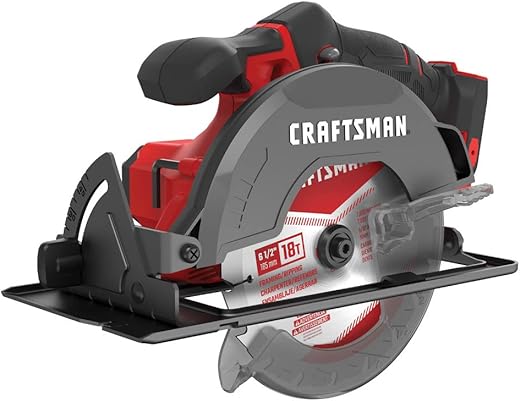
- Part of the V20 cordless system
- Cordless Circa saw accepts 61/2 in. Blades for cross cutting or ripping 2x material
- High performance motor runs at 4, 200 RPM's for aggressive fast cutting
- Tool-free BEVELING shoe pivots up to 50 deg. For angled cuts
- Metal shoe for added durability.The compact and lightweight design help reduce fatigue.Contoured overmolded handle for added comfort during use.3 Year Limited Warranty, refer to "Warranty & Support" section below for full details
- Battery and charger sold separately
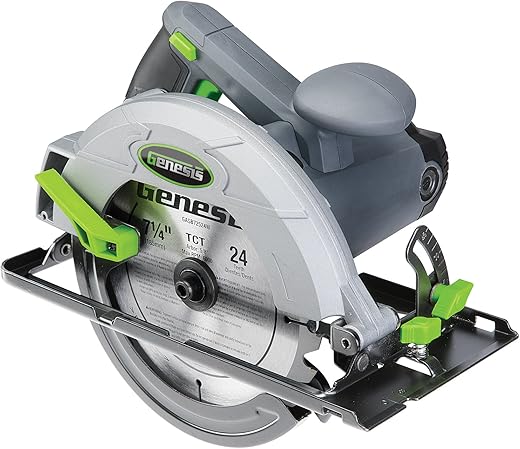
- 13-amp motor
- Spindle lock for easy blade changes
- Externally replaceable brushes
- Blade size: 7-1/4 in.
- No load speed: 5,500 RPM
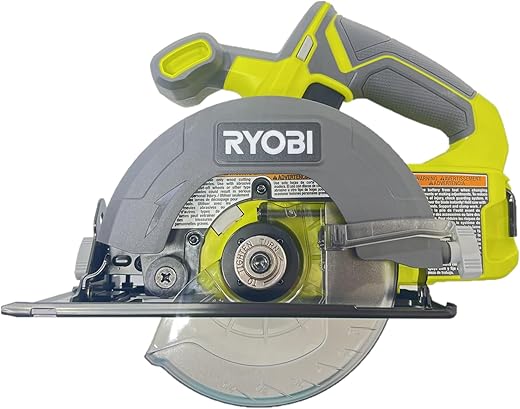
- GRIPZONE OVERMOLD: The handles of this power tool are lined with a rubber mold. This increases friction between your hands and the tool, improving handling in most conditions
- TRANSPARENT LOWER GUARD: The polyurethane blade guard is clear, so you can get maximum visibility on your work while you make your cuts
- ADJUSTABLE BEVEL: You can adjust the foot of this cordless circular saw up to 50 degrees to cut at a variety of angles for different applications
- EXTRA SIDE HANDLE gives you improved control. Its location on the left side of the tool gives you greater visibility over your cuts while you work
- ONE+ COMPATIBLE: The circular saw works with Ryobi’s 18 Volt batteries. These battery models include the P100, P102, P103, P104, P105, P107, and P108 (Batteries not included)

- Powerful circular saw: 4-amp electric motor – delivers a no load speed of 3,500 rpm – easily cuts through wood, PVC tubing, laminate flooring, plastic, plasterboard and MDF. Includes an 24T Tungsten Carbide Tipped Blade 4-1/2 in diameter. Arbor Size: 3/8in
- Laser guide and bevel lever: This mini saw comes with laser beam guide and the scale ruler, which can assist you to cut a straight line for when high precision is needed. Accurate cuts are assured by the parallel guide and laser light. Angle adjustment for bevel cuts of up to 45°
- Depth gauge lever and dust extraction system: This mini circular saw can adjust the cutting depth anywhere from 0 to 1-11/16"(42.8mm) with a max. cut of 42.8 mm in order to adapt to perform better when cutting different materials. Leave your working area free of dust with the vacuum adaptor, for more precise cuts and helping you to focus on the task without the mess
- Compact & handy circular saw: Compact body and lightweight perfect for one-handed operation; it features ergonomic soft handles for better hand-feeling and provides optimum cutting line visibility for tight detail work
- What you get: 1* Mini Circular saw, 1* 24T tungsten-carbide-tipped wood/plastic blade, 1* allen key for saw change, 1* rip guide, 1* vacuum adapter, 1* user manual, 1* warranty card

- Left blade SIDEWINDER improves blade and cut line accuracy and visibility
- All-magnesium construction reduces user fatigue and adds durability
- Powerful Dual-Field Motor increases cooling and extends tool life
- Best-in-class torque improves productivity and increases speed of cut
- Extended 56 degree bevel adds capacity for a wider variety of cuts

- comes equipped with a contoured design and front pommel handle for added comfort and grip
- 13-amp motor and 20 tooth carbide-tipped blade
- 2-7/16 in. depth of cut at 0 degrees, 1-7/8 in. depth of cut at 45 degrees and 1-11/16 in. depth of cut at 51.5 degrees
- Power source type: Corded Electric
- Included components: Bare-Tool

- Increased visibility and cut accuracy with bright LED
- Quickly adjust the bevel capacity from 0 - 50° with the tool-free bevel lever
- Minimize dust while cutting with the optional dust chute, compatible with the DEWALT airlock system or standard 35 mm dust extractor
- High maneuverability with its lightweight and compact design
- Added safety: electric brake quickly stops the blade after the trigger is released
- Compatible with all DEWALT 20V MAX* and FLEXVOLT batteries
- Powerful and efficient brushless motor provides optimal cutting performance in a variety of materials
- Convenient storage on the jobsite with the built-in rafter hook
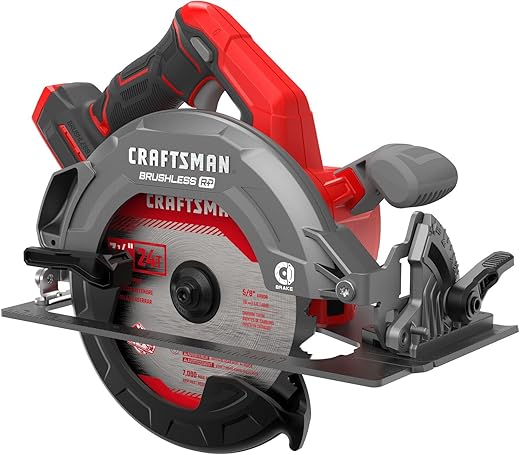
- Brushless motor: up to 75% more power***
- See clearly: LED illuminates the cutting line and worksurface
- Maximum bevel: 56 degrees with positive stops at 22.5 and 45
- Improved durability: upper metal guard offers resilience

- Delivers the trusted performance of the Makita 5007F 7-1/4" circular saw with the capacity to cut 4x lumber in a single pass
- Powerful 15 amp motor delivers 4, 300 RPM with power to cut beams, engineered lumber, and timber
- Well balanced design at 16-1/2" long and weighing only 15.2 pounds For increased operator comfort
- Auxiliary front and top handles are positioned for comfort and control
- Large cutting capacity (3-13/16" at 90° and 2-11/16" at 45°)