
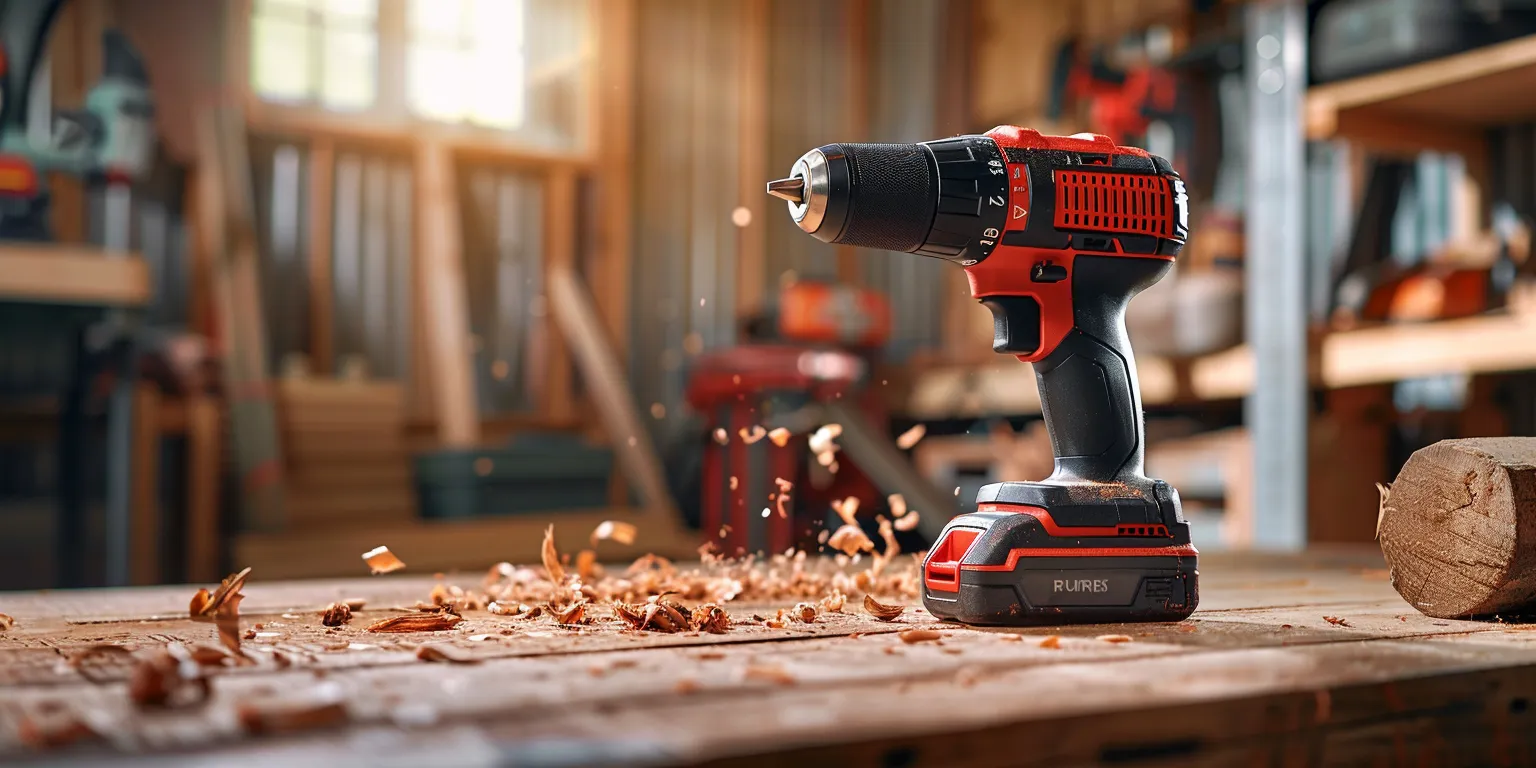
A Deep, Data-Driven Guide for DIY Woodworkers (2025)
If you build furniture, cabinets, jigs, or shop fixtures, the “best cordless drills” aren’t the ones with the loudest marketing claims—they’re the ones that deliver repeatable hole quality, predictable screw seating, low fatigue, and battery/runtime behavior you can actually plan around. For professional DIY woodworkers, a cordless drill is less a “tool purchase” and more a system decision: drivetrain (motor + gearbox), ergonomics, safety, and—most importantly—the battery ecosystem that will anchor your shop for years.
This report-style guide synthesizes safety standards, occupational research, battery and motor literature, market/industry reporting, and independent head-to-head testing to build a definitive framework for choosing the best cordless power drill for woodworking use-cases—without getting trapped in hype.
Why “Best Cordless Drills” Is a Woodworking-Specific Problem
Woodworking punishes drills in a unique way:
- Precision matters: bit runout, chuck quality, and gearbox smoothness show up as blown-out holes, wandering pilot holes, and inconsistent countersinks.
- Torque delivery must be controllable: too much, too fast strips screws; too little stalls or snaps small bits.
- Duty cycle is real: pocket-hole runs, hinge installs, shop cabinetry, and repeated boring stress heat management and battery sag.
- Ergonomics is productivity: grip geometry, balance with a 5Ah+ pack, trigger modulation, and vibration all affect accuracy and fatigue (and long-term exposure risk).
Safety and exposure guidance from NIOSH makes it clear that repeated use of vibrating hand tools can contribute to hand–arm vibration syndrome (HAVS) and related neurological/vascular issues, emphasizing redesign, engineering controls, and exposure reduction strategies. (CDC)
The Modern Cordless Drill Landscape (What Changed—and Why It Matters)
Cordless dominance isn’t a trend anymore; it’s the default
Industry reporting continues to show strong growth in cordless power tools driven by battery advancements and DIY/pro demand. (Global Market Insights Inc.)
For your buying decision, that means two practical truths:
- Battery platforms (not individual drills) define long-term value.
- Most premium “best drills cordless” contenders now converge on similar headline specs—so the differentiators move to control, thermal behavior, chuck/gear quality, and ecosystem depth.
Brushless motors became mainstream for a reason
Brushless DC motor research consistently highlights efficiency advantages (often very high under optimized control) and the importance of good control strategies and characterization for real performance. (ResearchGate)
In a drill, that efficiency translates into:
- more work per watt-hour (runtime),
- less heat in the motor,
- better torque control across the trigger range,
- potentially longer service life (fewer wear components).
Definitions: Drill/Driver vs Hammer Drill vs Impact Driver (Woodworker View)
- Drill/Driver: Your primary woodworking drill. Prioritize chuck quality, runout, low-speed control, clutch consistency, and balance.
- Hammer Drill: Adds percussive action for masonry. In wood, the hammer mode is off—but hammer drills are often the “flagship” drivetrain in a brand line, so they can still be excellent in wood.
- Impact Driver: Not a drill, but a screw-fastening monster. In woodworking, use it for long structural screws, ledger work, deck builds, and repetitive driving—while the drill handles pilot holes, countersinks, and precision driving.
Safety standards differentiate categories and applicability. IEC 62841-2-1 specifically covers hand-held drills and impact drills (not rotary hammers). (Iteh Standards)
The Engineering Core: What Actually Makes the Best Cordless Drills
1) Torque is not one number (and wood cares about control)
Marketing loves “max torque,” but woodworking cares about:
- Low-speed torque (boring with Forstners, spade bits, hole saws)
- Torque smoothness (less chatter, fewer stalls)
- Clutch repeatability (consistent screw seating)
- Anti-kickback behavior (wrist safety when a bit binds)
Independent head-to-head testing tends to separate drills by how they behave under load (stall resistance, sustained speed, thermal throttling), not just peak specs. (Pro Tool Reviews)
Woodworking takeaway: treat “max torque” as a minimum entry ticket; choose based on how well the drill holds RPM under real boring loads and how cleanly you can feather the trigger.
2) Gearbox quality is the silent differentiator
Two drills can share voltage and torque numbers but feel totally different because of:
- gear mesh quality,
- lubrication and tolerance,
- shift mechanism precision,
- electronic current limiting strategy.
In practice: better gearboxes feel “calmer,” drill straighter, and let you stop exactly where you want when driving screws flush.
3) Chuck quality and runout: the accuracy tax
Woodworking precision demands:
- solid jaw alignment,
- minimal runout,
- strong bit retention,
- a sleeve that doesn’t loosen easily.
If your brad-point bit wobbles, your hole drifts. If your countersink chatters, your screw heads sit ugly. This is why many professional reviews weigh “build quality” and “chuck performance” heavily when ranking the best cordless drills. (GearLab)
4) Electronics: the hidden “feel” of the tool
Modern brushless drills use electronics to manage:
- current limiting,
- thermal protection,
- soft-start,
- anti-kickback / bind-up mitigation.
This matters for woodworking because bind-ups are common (Forstners, hole saws, augers in dense stock). Electronics can reduce wrist-snapping events—but also can “feel weak” if overly conservative.
5) Battery pack architecture is performance
Not all “18V/20V class” packs behave the same. High-power lithium-ion performance depends on chemistry, cell design, and how the pack handles high C-rate pulses (the exact thing drills demand). A recent open dataset on high-power NMC lithium-ion cells includes high C-rate pulse and impedance testing across temperatures, underscoring that power delivery varies significantly with conditions and cell characteristics. (Nature)
Also, literature comparing 21700 vs 18650 form factors highlights why some newer packs deliver better sustained power and capacity—useful context for why certain premium platforms feel “stronger for longer.” (MDPI)
Woodworking takeaway: if you routinely bore big holes (35mm hinges, 1″+ Forstners, hole saws), battery + thermal behavior may matter more than the drill body.
Safety, Standards, and Why Pros Should Care
Woodworkers often think standards are “corporate paperwork.” In reality, standards define baseline safety and test expectations.
Tool safety standards that frame cordless drill design
- IEC 62841-1 (general safety for motor-operated hand-held tools) and amendments continue to evolve. (Webstore IEC)
- IEC 62841-2-1 covers drills/impact drills specifically and clarifies scope (e.g., excludes rotary hammers). (Iteh Standards)
- UL/Intertek documentation tracks updates aligned to these standards for regional compliance frameworks. (Intertek)
Battery safety is not optional
OSHA warns that lithium-ion batteries present hazards across manufacturing, use, emergency response, disposal, and recycling—especially related to thermal runaway, fire, and chemical byproducts. (A-Salute Lavoro)
For shop practice, that translates into boring-but-critical habits:
- use the correct charger,
- don’t store packs in extreme heat,
- retire damaged packs,
- keep charging away from combustibles.
Exposure and vibration: woodworking is not immune
NIOSH has long recommended minimizing use of vibrating hand tools and implementing engineering/work practice controls where elimination isn’t possible. (CDC)
A broad review of hand–arm vibration studies also emphasizes the research basis for occupational criteria and recommendations. (PMC)
Even if you’re “just a serious DIYer,” your exposure can add up if you’re drilling and driving frequently.
Practical drill safety guidance (credible organizations)
The Canadian Centre for Occupational Health and Safety (CCOHS) gives straightforward best practices for powered hand drills (PPE, inspection, keeping vents clear, checking battery condition, etc.). (ccohs.ca)
OSHA also publishes general guidance on safe use of portable and hand-held power tools. (A-Salute Lavoro)
The Performance Metrics That Actually Matter in a Wood Shop
Below is a professional-grade scorecard you can use to evaluate “best cordless drill for home use” needs as a woodworker, not a general consumer.
A) Hole-making performance (wood drilling)
Look for performance in:
- 35mm Forstner boring (Euro hinges): sustained torque, low-speed control, anti-stall behavior.
- 1/2″–1″ auger (softwood framing, deck builds): bind-up management, side-handle usability.
- Hole saws (2″+): thermal protection behavior and battery sag.
- Brad-point precision (joinery): runout, trigger feathering, and a stable clutch off.
Independent tests that simulate real-world load conditions tend to be more predictive than spec sheets. (Pro Tool Reviews)
B) Driving performance (screws in wood)
Driving performance isn’t “how fast it can destroy a screw.” It’s:
- consistent clutch settings,
- low cam-out,
- control at the end of the drive,
- ability to stop exactly at flush or slightly proud (then finish by hand).
C) Thermal behavior and sustained output
Wood drilling can be a sustained load (especially with big bits). Some drills hit thermal limits and reduce output (“throttle”). This is where premium models often separate from mid-tier.
D) Ergonomics & balance
For woodworking accuracy, ergonomics is performance:
- balance with the battery you actually use,
- handle angle and grip texture,
- trigger linearity,
- LED placement (shadowing matters under cabinets).
E) Ecosystem logic (the “platform tax”)
The best cordless power drill is often the one that matches the battery ecosystem you’ll commit to:
- compact 12V platform for installs and cabinetry,
- 18V/20V class for general drilling and heavier boring,
- specialty tools you actually want next (track saw? router? brad nailer?).
What Independent Testing Says About “Best Cordless Drills” (And How to Use It)
Because model lines change, your goal shouldn’t be to memorize “the top drill.” Your goal is to extract repeatable signals from credible testing.
Credible test sources and what they’re good for
- Pro Tool Reviews (Head-to-Head 2025): focuses on objective, jobsite-simulating tests and ranks across categories. (Pro Tool Reviews)
- TechGearLab (2025 testing): evaluates drills across performance and usability, with frequent updates when new models arrive. (GearLab)
- Consumer Reports (Best Cordless Drills 2025): “tough tests” approach; often strong on comparative methodology (though full details may be behind membership). (Rapporti dei consumatori)
How to interpret testing like a pro woodworker:
- Weight control and precision higher than raw speed.
- Favor tests that include boring under load, not just screw driving in pine.
- Pay attention to battery used in testing (a drill may look weak with a small pack).

Decision Framework: Choosing the Best Cordless Drills by Woodworking Persona
Persona 1: The Furniture Builder (precision-first)
Priority order
- chuck/runout + smooth trigger
- compact head length for jigs/inside cabinets
- clutch consistency
- low-speed torque for Forstners (moderate)
What usually wins
- A high-quality 12V brushless drill for 70% of tasks + an 18V drill for big boring.
- You’ll feel the difference most in pilot holes, countersinks, hardware installs.
Persona 2: The Cabinet/Install Specialist (overhead work, confined spaces)
Priority order
- weight and balance
- short head length
- LED quality / shadow reduction
- battery swap speed and pack shape
Here, “best cordless drill for home use” can genuinely mean “best compact drill,” because accuracy and fatigue dominate.
Persona 3: The Shop Builder + Occasional Deck/Framing (power-first)
Priority order
- sustained torque with large bits
- thermal behavior
- side-handle support and anti-kickback feel
- battery platform depth (saws, nailers, lights)
This user benefits most from the best-in-class 18V/20V brushless hammer drill (even if hammer mode stays off).
The Spec Sheet Trap: How to Read Drill Specs Like an Engineer
Voltage classes
- 12V class: often best for control and ergonomics; surprisingly capable for woodworking.
- 18V/20V max class: the workhorse category (note: “20V Max” is typically a naming convention; nominal pack voltage is ~18V).
RPM ranges
- Low gear is for torque and control (drilling and driving)
- High gear is for smaller bits and clean holes in softer stock
Clutch settings
More isn’t always better. What matters is repeatability and usable spacing.
Battery Ah (amp-hours) is not “power”
Ah is capacity. Power delivery depends on pack design and cell capability—something battery research and high C-rate testing makes clear. (Nature)
The “Best Cordless Drills” Shortlist Logic (Without Locking You Into One Model)
Instead of claiming one universal winner, use a tiered recommendation strategy that matches how drills are actually used in wood shops.
Tier A: The flagship 18V/20V brushless hammer drill (your “do-everything”)
This category typically tops independent head-to-head comparisons and is often crowned “best cordless drill” overall due to load handling and versatility. (Pro Tool Reviews)
Buy this if:
- you bore large holes regularly,
- you want one drill that can take abuse,
- you’re building decks, pergolas, shop walls, or heavy cabinetry.
Tier B: The compact 12V brushless drill/driver (your “precision daily driver”)
This is the hidden weapon for woodworking:
- better control,
- lower fatigue,
- fits in jigs and tight cabinets.
In many shops, the true best cordless power drill for day-to-day woodworking is a compact model—even if the flagship wins torque tests.
Tier C: The value 18V drill (best cordless drill for home use, budget-smart)
Independent testing often highlights that mid-tier drills can deliver excellent real-world capability, especially for general homeowner/DIY loads. (GearLab)
Buy this if:
- you drill holes under 1″ most of the time,
- you drive moderate screws,
- you want platform entry at lower cost.
A Practical Buying Checklist for Professional DIY Woodworkers
Bring this to your next drill purchase (in-store or online).
1) Do a “Forstner reality check”
If you routinely drill hinge cups (35mm) or use 1″+ Forstners:
- prioritize a drill known for load performance in head-to-head tests (Pro Tool Reviews)
- use larger packs for sustained boring (5Ah+ class, where available)
2) Evaluate balance with the battery you’ll actually run
A drill that feels great bare may feel nose-heavy or handle-heavy with a big pack.
3) Check chuck action and sleeve feel
- Does it tighten smoothly?
- Does it “click” positively at lock?
- Does it loosen easily after a bind?
4) Trigger modulation test
If you can’t “start a screw gently” or “kiss a brad-point to a layout mark,” it’s not a woodworking-friendly drill—no matter the torque rating.
5) Safety/maintenance readiness
Follow credible guidance: inspect batteries for damage, keep vents clear, and use proper PPE. (ccohs.ca)
And remember OSHA’s lithium-ion hazard framing when you store/charge packs. (A-Salute Lavoro)
Advanced Shop Optimization: Getting Better Results From Any Cordless Drill
Use the right bit strategy
- Brad-point for accurate starts in hardwoods
- Split-point twist bits for general work
- Forstners for flat-bottom holes (slow speed, steady feed)
- Dedicated countersink bits tuned for your screw head style
Control tear-out
- backer boards,
- sharp bits,
- correct speed (too fast burns; too slow chatters),
- clamp stock (accuracy and safety).
Reduce bind-up risk (wrist safety)
- Use side handle for large bits
- Keep stance stable
- Let the bit cut—don’t force it
Safety standards and OSHA guidance exist for a reason; bind-ups are a major real-world hazard pathway. (A-Salute Lavoro)
Manage vibration exposure (serious DIYers should still care)
NIOSH’s long-standing recommendations focus on minimizing exposure through design/work practices. (CDC)
In practice:
- take short breaks during repetitive drilling,
- choose sharp bits (less vibration),
- avoid death-gripping the tool.
The Bottom Line: What “Best Cordless Drills” Really Means in 2025
For professional DIY woodworkers, the best cordless drills are the ones that combine:
- precision hardware (chuck + low runout),
- controlled torque delivery (drivetrain + electronics),
- sustained boring ability (battery + thermal behavior),
- low fatigue ergonomics (balance, grip, trigger),
- and a platform ecosystem that won’t box you in later.
If you want one “rule” to anchor your purchase:
Choose the battery platform first, then pick the drill body that best fits your dominant woodworking tasks (precision install vs heavy boring). Independent test data is most valuable when you interpret it through that lens. (Pro Tool Reviews)