
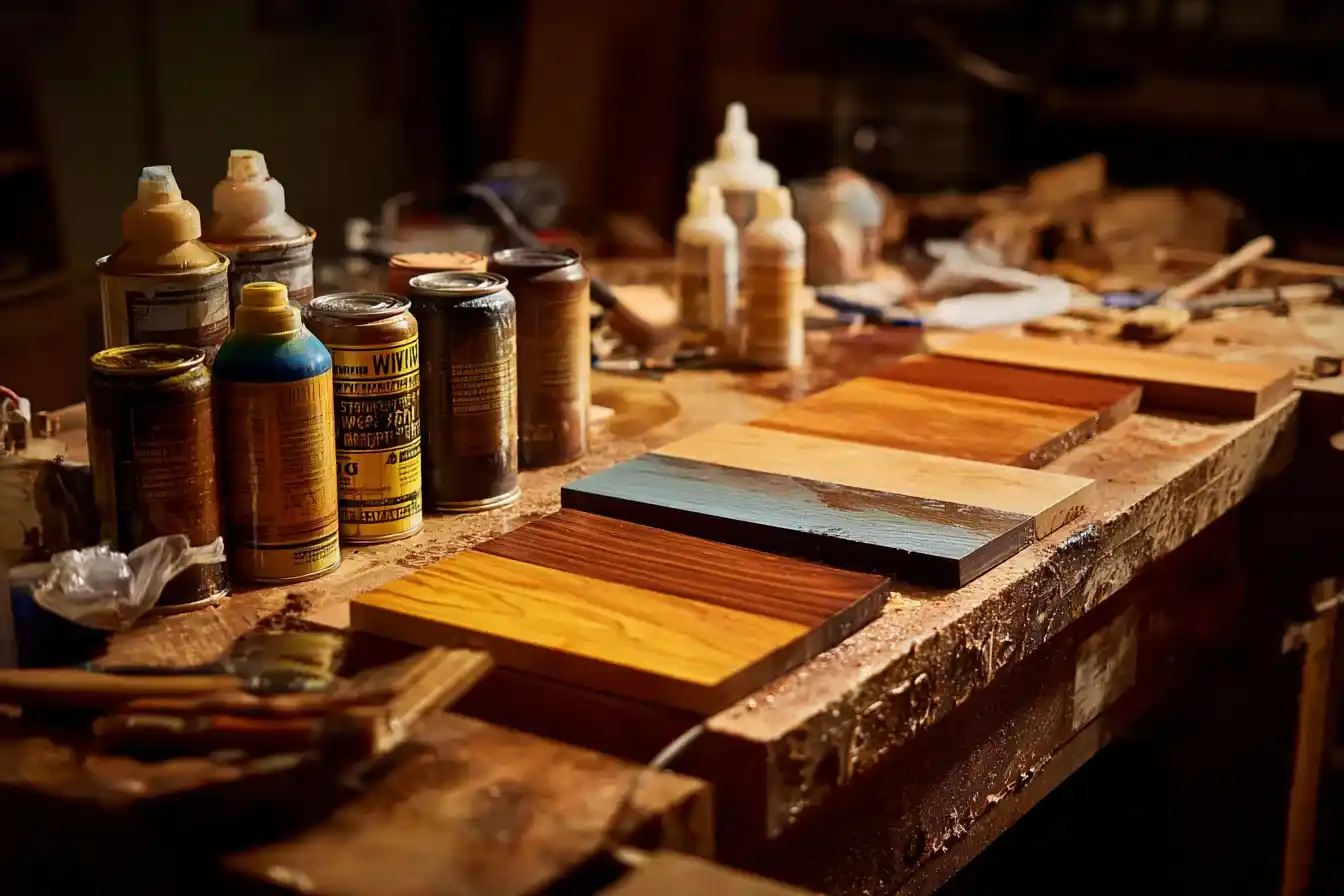
Woodworking Finishing & Surface Treatment is where your project stops looking “home-made” and starts looking “professional”. For serious DIY woodworkers, mastering finishing is non-negotiable if you want durable, predictable, repeatable results.
Below is a research-driven, long-form overview that synthesizes recent academic papers, industry data, and technical guidance. It’s written for advanced hobbyists and small-shop woodworkers who want to make decisions more like coatings engineers than weekend varnishers.
1. Why Woodworking Finishing & Surface Treatment Matters
Finishes do three jobs:
- Protect – against moisture cycling, UV, abrasion, chemicals, and dirt.
- Stabilize appearance – color, sheen, depth, and uniformity.
- Enable maintenance – cleanability, repairability, and refinishing.
The U.S. Forest Products Laboratory (FPL) bluntly notes that finishes exist not just for appearance but to manage wood’s dimensional movement, increase service life, and provide a cleanable surface. (fpl.fs.usda.gov)
Modern research goes further: finish performance is controlled as much by the wood–coating interface (surface chemistry, roughness, free surface energy) as by the coating formula itself. (MDPI)
If you care about long-lasting projects, you must treat surface preparation woodworking and coating choice as a system, not separate steps.
2. Wood as a Substrate: The Rules of the Game
Before talking about “the best woodworking finish”, you need to understand what you’re actually coating.
2.1 Anisotropic, Hygroscopic, and Moving
Wood:
- Expands and contracts mostly across the grain as moisture content changes.
- Has earlywood/latewood density differences that affect stain uptake and sanding behavior.
- Contains extractives (oils, tannins, resins) that can interfere with adhesion, cause discoloration, or bleed through finishes. (research.fs.usda.gov)
Result: even a “perfect” coating will fail if the wood substrate is poorly prepared, too wet, or allowed to move excessively.
2.2 Surface Roughness & Surface Energy
Recent review work shows:
- Surface roughness and free surface energy strongly affect coating adhesion and wetting.
- Proper sanding or other treatments can improve wettability and bonding, especially on hardwoods. (MDPI)
Think of it this way: you’re not just “smoothing wood”; you’re engineering the interface your finish must bond to.
3. Surface Preparation in Woodworking Finishing
Most finish failures are prep failures wearing a different costume. Let’s break down what the research actually says.
3.1 Machining vs Sanding
Studies comparing planed vs sanded surfaces on beech and other hardwoods show: (idk.org.rs)
- Planing often compresses surface fibers and leaves tear-out, reducing adhesion.
- Sanding with appropriate grits produces lower, more uniform roughness, improving adhesion for 2K acrylic and polyurethane coatings.
Practical takeaway for DIYers:
For high-performance Woodworking Finishing & Surface Treatment, don’t go straight from the planer to finishing. Always sand.
3.2 Optimal Sanding Grit Sequences
From FPL guidelines and adhesion studies: (fpl.fs.usda.gov)
- Too coarse (e.g., 60–80 grit) → deep scratches, inconsistent film thickness, more stain blotching.
- Too fine (e.g., 320+ before stain) → burnishing, lower surface energy, poor wetting and adhesion.
- Sweet spot for most interior coatings on hardwoods:
- Machine marks removal: 80–100
- Intermediate: 120–150
- Final: 150–180 (up to 220 for film finishes, but be careful before penetrating stains)
Rule of thumb for surface preparation woodworking:
- Stain + film finish: stop at P150–P180
- Clear film only (no stain): you can go to P180–P220
- Exterior rough-sawn surfaces: often don’t sand at all; roughness improves performance of penetrating finishes outdoors. (fpl.fs.usda.gov)
3.3 Advanced Surface Treatments (Beyond Sandpaper)
Research labs are experimenting with:
- UV pre-treatment: slightly oxidizes and increases surface energy, improving adhesion on some substrates. (Drvna Industrija)
- Cold plasma treatment: modifies near-surface chemistry, increasing wettability and sometimes durability of both waterborne and solvent-borne systems. (MDPI)
These aren’t practical yet for most DIY woodworkers, but they explain why simply “sanding more” is not the only axis of control in professional finishing.

4. Categories of Woodworking Finishes
You can group woodworking finishing products by how they protect and how they look.
4.1 Penetrating Finishes
- Raw/tung/boiled linseed oils, oil/varnish blends, hardwax oils
- Penetrate fibers, increase contrast and depth.
- Offer limited film-build and moderate protection at best (hardwax oils are better but still thin).
- Easy to renew; the finish profile is low and forgiving of movement.
Best for: furniture that won’t see heavy wear or severe moisture (e.g., occasional tables, low-traffic shelves).
4.2 Film-Forming Finishes
- Traditional varnishes (alkyd/phenolic), polyurethane varnishes, waterborne acrylic/polyurethane, lacquers, catalyzed and 2K systems, conversion varnishes.
- Form a continuous film on top of the wood.
- Provide better moisture and abrasion resistance, but also concentrate stress at the wood–coating interface.
For professional-grade Woodworking Finishing & Surface Treatment, most high-performance systems are film-forming.
4.3 Coloring Systems
- Dyes – very small molecules, transparent, great for depth, but prone to fading and uneven absorption without control.
- Pigmented stains – particles lodged in surface, more color control and UV resistance.
- Glazes and toners – intermediate color layers between finish coats.
Research on exterior coatings consistently shows pigmented systems outperform clear ones in UV durability. (MDPI)
4.4 Sealers, Primers, Fillers
- Sanding sealers – quick-build, easy-sand layers to level the surface.
- Barrier sealers – shellac or specialized sealers to block extractives, tannin bleed, or odor.
- Pore fillers – for open-pore species (oak, walnut) when you want a glass-smooth finish.
Using the right sealer or filler is often the difference between “OK” and “luxury-grade” furniture.
5. Waterborne vs Solvent-Borne: What the Data Actually Says
DIY forums are full of myths here, but we have hard numbers.
5.1 Performance Comparisons
A study comparing water-based, solvent-based, and powder coatings on wood found: (scielo.cl)
- Water-based acrylic coatings often showed equal or higher adhesion and impact resistance than solvent-based equivalents.
- Coating type significantly influenced hardness, layer thickness, and deformation resistance.
- Surface treatments (like plasma) further improved waterborne performance in accelerated weathering tests.
Recent reviews of outdoor wood finishing also highlight that modern waterborne acrylic systems with suitable UV absorbers and HALS (hindered amine light stabilizers) can match or exceed older solvent systems, especially when pigmented. (bioresources.cnr.ncsu.edu)
5.2 VOCs, Safety & Regulation
Solvent-borne systems (alkyds, nitrocellulose lacquers, many conversion varnishes) typically:
- Emit higher levels of volatile organic compounds (VOCs).
- Require stricter control of ventilation, ignition sources, and PPE.
OSHA’s wood finishing hazard guidance notes that nitrocellulose lacquers and acid-catalyzed coatings can expose workers to solvents through inhalation and skin absorption and pose significant flammability risks. (osha.gov)
Industry comparisons underline:
- Water-based coatings are generally safer to apply, less flammable, and easier to clean up.
- Modern water-based lacquers and polyurethanes have significantly improved in clarity, feel, and repairability. (rawlinspaints.com)
5.3 Practical Decision for DIYers
For most serious DIY woodworkers today:
- Interior work: waterborne acrylic/polyurethane is often the best balance of performance, safety, and ease of use.
- High-end specialty (e.g., guitars): nitrocellulose or specific solvent-borne formulas still dominate for aesthetic reasons.
- Exterior: high-solid, pigmented acrylic or alkyd-acrylic systems remain standard.
Solvent systems aren’t “dead”, but they are no longer automatically “better” than water-based.
6. Interior vs Exterior: Why Context Changes Everything
6.1 Clear Finishes Outdoors Are Always a Compromise
Multiple studies and reviews agree:
- Clear exterior coatings on wood have intrinsically low durability because UV light attacks lignin in the wood just beneath the film, leading to loss of adhesion and cracking. (MDPI)
- Nano-additives (e.g. nano-silica, advanced UV absorbers) improve performance but don’t eliminate the underlying problem. (PMC)
If you want long life outdoors, research and field tests converge on:
Pigmented systems on rough-sawn or textured wood last significantly longer than clear finishes on smooth planed wood. (fpl.fs.usda.gov)
6.2 Wood Species Matters
Studies on exterior transparent acrylic coatings show: (woodresearch.sk)
- Different species show different adhesion and weathering behavior.
- Some hardwoods with specific pore structure and surface energy (e.g., oak variants) behave differently than softwoods, influencing coating life.
For the DIYer choosing the “best woodworking finish” for outdoors, wood choice is part of the finish system.
7. Recommended Finish Systems for Common DIY Use Cases
Let’s get practical. Here are research-aligned, shop-tested systems for major scenarios.
7.1 Fine Interior Furniture (Dining Tables, Desks)
Goals: high clarity, good abrasion/chemical resistance, repairability.
Recommended system (modern, safer):
- Surface prep to P180 (maybe P220 on diffuse-porous hardwoods).
- Optional dye for depth.
- Waterborne acrylic/polyurethane:
- 1 x thin sealer coat (same product thinned or manufacturer’s sealer).
- Light de-nib with P320–P400.
- 2–3 x build coats, scuff between.
- Optional final rub-out with micro-mesh to desired sheen.
This setup leverages modern waterborne performance while keeping VOCs lower than a solvent-heavy approach. (scielo.cl)
Alternative (classic, solvent):
High-quality oil-modified polyurethane or alkyd/urethane varnish over an oil or shellac sealer, 3–4 coats, long cure time, more odor and VOCs.
7.2 Kitchen & Bath Cabinets
Goals: chemical resistance, water resistance, frequent cleaning.
Recommended system:
- If you can access pro-grade products: waterborne 2K polyurethane or high-quality waterborne acrylic designed for cabinets.
- If you’re limited to consumer products: top-tier waterborne “cabinet & trim” enamel or waterborne poly over a bonding primer.
Why? Research and field practice show that properly formulated waterborne acrylics with crosslinking and appropriate hardeners deliver excellent block resistance and chemical resistance with less yellowing over time. (MDPI)
7.3 Exterior Doors & Outdoor Furniture
Goals: UV and moisture resistance, maintainable over time.
Best practice from outdoor finishing literature: (MDPI)
- Prefer pigmented exterior systems (solid or semi-transparent) over clears.
- Use rough-sawn or textured wood when possible.
- Build to manufacturer’s recommended film thickness and recoat before failure.
A robust system:
- Sand appropriately (but avoid glass-smooth on exterior).
- Exterior primer or basecoat compatible with your topcoat (alkyd or acrylic).
- 2–3 x coats of high-quality exterior acrylic or alkyd-acrylic.
- Maintain: inspect yearly; touch up early.
For those who insist on clear finishes outdoors, choose products with:
- High UV absorber/HALS package.
- Explicit exterior clear labeling.
- Acceptance that frequent maintenance is part of the deal.
8. A Step-by-Step Finishing Workflow
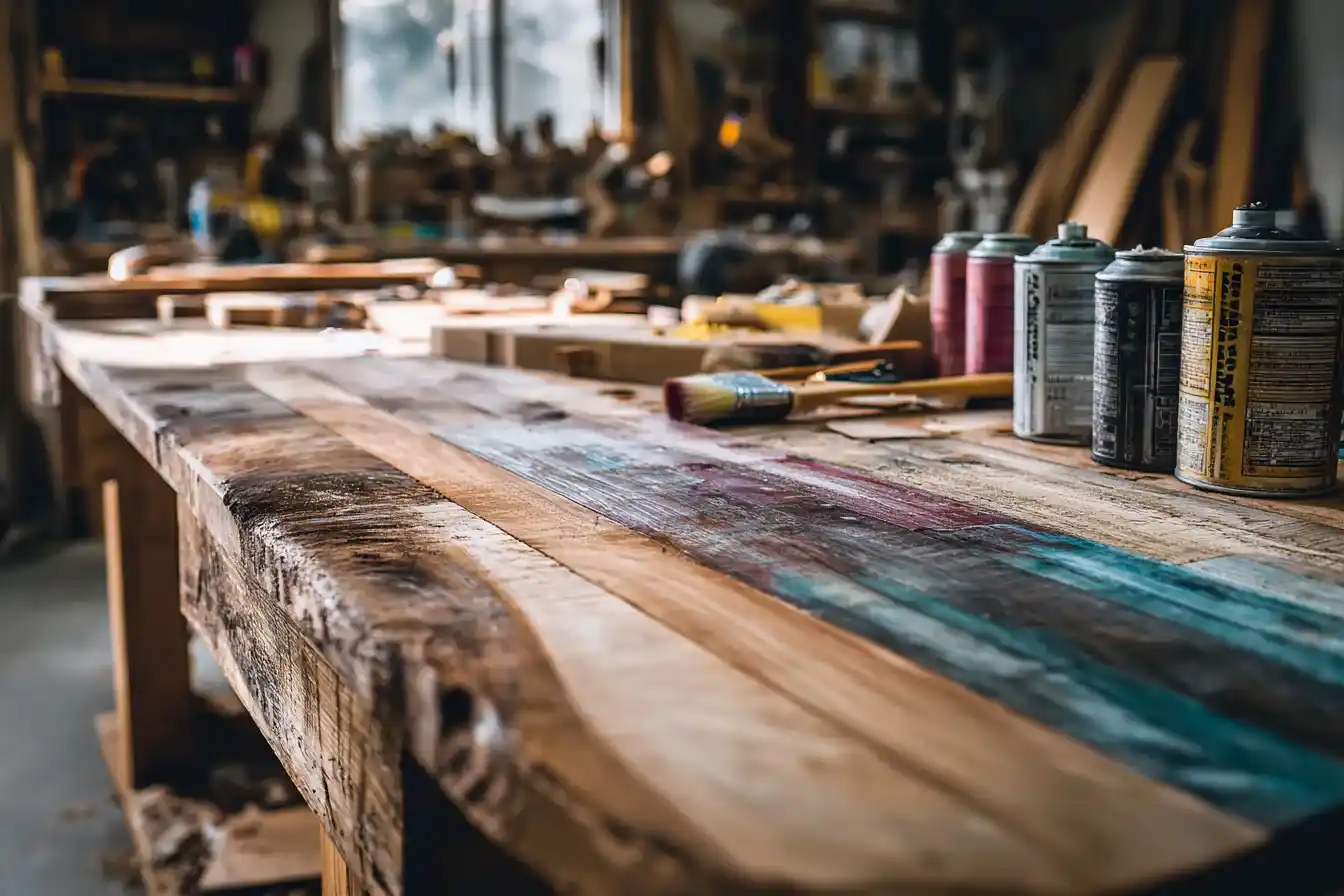
You can adapt this generic Woodworking Finishing & Surface Treatment workflow to almost any project.
8.1 Conditioning & Inspection
- Bring wood moisture content into equilibrium with your shop (typ. 6–10% for heated interiors).
- Inspect for:
- Glue squeeze-out.
- Mill marks and tear-out.
- Contamination (oils, silicone from polishes, metal dust).
8.2 Surface Preparation Woodworking Checklist
Sanding:
- Start no coarser than P80 unless the surface is bad.
- Progress through grits without skipping more than one step: 80 → 120 → 150/180.
- Sand with the grain on the final pass.
- Use fresh, sharp abrasives; dull paper burnishes and loads.
Clean-up:
- Vacuum thoroughly (not compressed air alone – it just redistributes dust).
- Tack cloths or microfiber lightly; avoid silicone-containing cloths.
8.3 Sealing & Building the Film
- Test on scrap from the same project board—this is non-optional for predictable results.
- Apply your chosen sealer/first coat:
- Thin, even, and according to product spread rate.
- Avoid over-brushing; let the film level.
- Allow full dry per technical data sheet (TDS) – not just “touch dry”.
- De-nib with fine abrasive (e.g., P320–P400) to knock down dust nibs and raised grain.
- Apply 2–3 build coats, respecting recoat windows and sanding as required.
Modern coatings research emphasizes following the manufacturer’s film thickness and recoat window recommendations; under-building the film or over-thinning can significantly reduce durability. (bioresources.cnr.ncsu.edu)
8.4 Leveling, Rubbing Out & Polishing
For furniture-grade surfaces:
- After full cure (which may be days to weeks), level with P600–P1000, then progress through finer grits or micro-mesh.
- Buff with appropriate compounds for the sheen desired.
This is where projects stop looking “finished” and start looking “factory”.
9. Common Defects, Causes & Fixes
A professional approach to woodworking finishing includes diagnosing problems like a coatings engineer.
9.1 Adhesion Failure (Peeling, Flaking, Delamination)
Likely causes:
- Poor surface prep (compressed fibers, polish/wax contamination). (idk.org.rs)
- Coating applied over uncured previous layer or incompatible finish.
- Moisture cycling with too-brittle film or wrong system for environment.
Fix: Sand back to sound substrate, correct surface preparation woodworking (sanding, cleaning), switch to compatible system.
9.2 Alligatoring, Cracking, Checking
Likely causes:
- Excessive film build; brittle coatings on a moving substrate.
- Clear coatings outdoors on species and orientations prone to movement and UV degradation. (MDPI)
Fix: Strip or sand to sound layer, re-finish with a more flexible system, often pigmented, and ensure appropriate film thickness.
9.3 Blushing (Milky Haze)
Typical with: Fast-evaporating solvent lacquers in high humidity.
Cause: Trapped moisture in the film.
Fix: Use a retarder, adjust environment, or switch to less humidity-sensitive systems (many waterbornes are more tolerant if used correctly).
9.4 Fisheyes, Cratering
Cause: Surface contamination with silicone, oil, or certain polishes.
Fix: Aggressive cleaning (naphtha, then detergent), sanding, or sometimes applying a barrier sealer like dewaxed shellac before the main coating.
10. Health, Safety & Sustainability: Non-Negotiable for Pros
Professional-minded DIYers must treat health and safety as seriously as appearance.
10.1 Wood Dust Risks
A systematic review and occupational health guidance show: (rivm.nl)
- Long-term exposure to wood dust can cause nasal cancer, respiratory diseases, and irritation of eyes, lungs, and skin.
- OSHA sets a permissible exposure limit of 15 mg/m³ total dust (5 mg/m³ respirable), while NIOSH recommends 1 mg/m³ and even lower limits for some species.
Action items:
- Use effective dust collection at the source.
- Supplement with a quality respirator (P2/P3 or N95 equivalent or better, depending on jurisdiction).
- Wear eye and hearing protection during machining.
10.2 Solvents, Isocyanates & Catalyzed Systems
OSHA and NIOSH guidance for finishing chemicals highlights that: (osha.gov)
- Many solvent systems are neurotoxic and easily absorbed via inhalation and skin contact.
- 2K polyurethanes and isocyanate-containing products can cause sensitization and asthma.
- Inadequate ventilation, no PPE, and poor handling of rags and waste dramatically increase risk.
Practical measures:
- Prefer waterborne systems where performance is adequate.
- When using solvent/catalyzed finishes:
- Use organic vapor cartridges and, where needed, supplied-air masks.
- Keep rags that contain drying oils in metal containers with water or in approved oily waste cans to prevent spontaneous combustion.
- Follow product SDS instructions meticulously.
10.3 Toward More Sustainable Woodworking Finishing & Surface Treatment
Recent research and industry development focus on: (bioresources.cnr.ncsu.edu)
- High-performance waterborne systems with lower VOCs.
- Bio-based binders and additives where feasible.
- Nano-modified coatings that extend service life, reducing the need for frequent recoating.
For the professional DIYer, adopting modern waterborne and low-VOC finishes is both a health decision and a way to future-proof your shop against tightening regulations.
11. How to Choose the Best Woodworking Finish (Decision Framework)
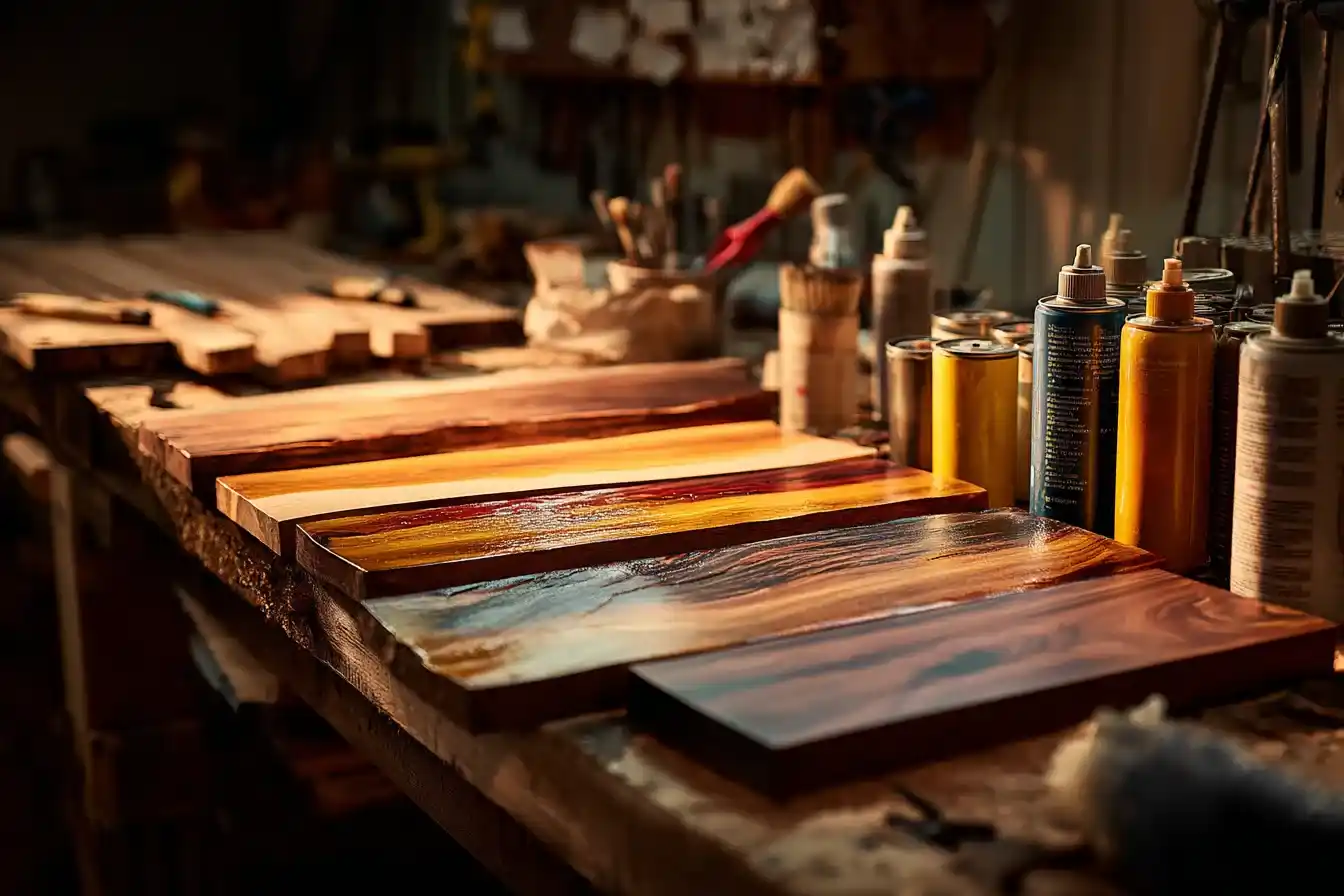
When selecting a woodworking finishing system, move away from “what’s trendy on YouTube” and ask structured questions:
- Environment
- Interior or exterior? Exposure to UV, liquid water, temperature extremes?
- Use & Abuse
- Light use (picture frames) vs heavy use (dining table, workbench, floor).
- Wood Species
- Oily or extractive-rich (teak, ipe), tannin heavy (oak), soft vs hard.
- Desired Aesthetic
- Open-pore vs glass-smooth; natural vs highly colored; matte vs gloss.
- Maintenance Tolerance
- Are you okay with regular refreshing (oiled finishes) or do you need “finish and forget” (hard film)?
- Application Constraints
- Brushing only, or can you spray? Shop ventilation and temperature?
- Safety & Compliance
- Are you willing to manage solvent hazards and PPE, or prefer waterborne?
A simple rule:
If in doubt for interior work: a well-formulated waterborne acrylic or polyurethane system over properly prepared wood is the safest, most versatile starting point for serious DIYers.
12. Key Takeaways for Professional-Grade DIY Work
- Surface preparation woodworking is as important as the coating. Aim for controlled sanding sequences, proper cleaning, and understanding of wood species. (idk.org.rs)
- Modern waterborne systems are not “inferior” by default. Research shows equal or better adhesion and impact resistance compared to many older solvent-based products, with better safety and environmental profiles. (scielo.cl)
- Clear exterior finishes are always a maintenance commitment. Pigmented systems on appropriate substrates remain the gold standard for outdoor durability. (MDPI)
- Health and safety are core parts of Woodworking Finishing & Surface Treatment. Manage wood dust, solvents, and catalyzed systems with the same seriousness you apply to joinery. (osha.gov)
If you approach finishing like this—grounded in research, process-driven, and safety-aware—you’re not just “putting something on the wood”; you’re engineering a performance surface.